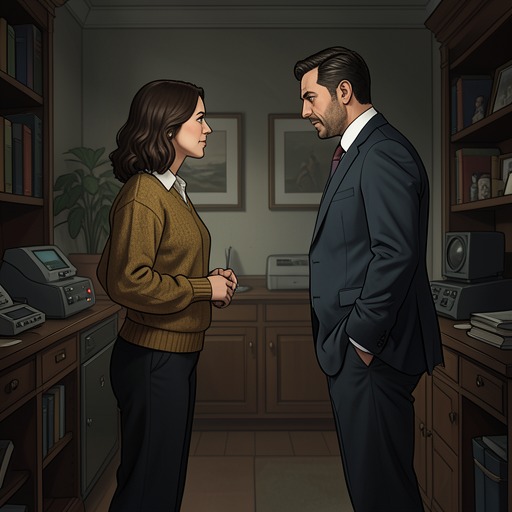
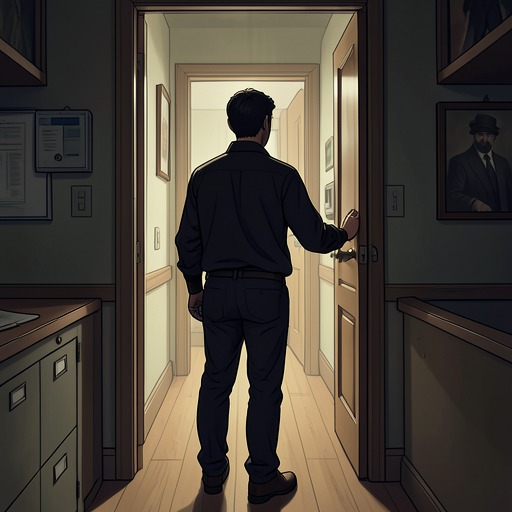
Cane goes to Payson after his night with Jada
The ExceptionCane’s trip to Payson after his night with Jada is an effort to regain distance at the moment his carefully detached approach to intimacy begins to fail. He leaves her asleep, returns to lie beside her without pressing for further intimacy, then departs before dawn; the retreat gives him time to organize his thoughts but leaves Jada to interpret his silence. The journey therefore exposes the gap between Cane’s private emotional confusion and the rules he has used to keep relationships at arm’s length.
Background and Motive
Before the trip, Cane frames intimacy as something temporary. He tells a woman that he does not offer a meal-and-sex arrangement as though it should be obvious, and privately insists that the woman had agreed to casual terms. His response reflects a broader habit: he expects attraction to remain separate from obligation and becomes frustrated when a partner seems to expect more. Against that pattern, Jada’s resistance to easy flirtation and her lack of interest in his display of money or status make her especially compelling to him. He recognizes that he does not want to spend substantial time with her, yet also finds that she will not simply accept the limited arrangement he expects.
Cane’s self-protection is not merely an improvised excuse for this particular departure. He describes his life as governed by a set of guidelines, beginning with trusting no one and taking responsibility for his own successes and failures. Those principles privilege independence and personal control. His later admission that Jada has occupied his thoughts since their first meeting shows why the night unsettles him: it puts pressure on a system designed to prevent attachment before it can bring disappointment.
The Night and Departure
After their night together, Jada lies in bed surrounded by Cane’s scent. He has gone downstairs, and his absence gives her time to wonder whether she has misjudged what happened. She tries to keep herself from overthinking and to accept the night without deciding in advance what it must become. When Cane comes back into the room, the bed shifts as he sits beside her for a few moments. He then lies down without touching her, apart from brushing a lock of hair from her face, and tells her to sleep. The quietness of this return matters: he does not resume their intimacy, but neither does he leave the room at once.
Cane’s account supplies the reason for his next move. He says that being around Jada makes it impossible to think clearly, and that watching her sleep stirred thoughts of staying close to her rather than simply leaving. Before sunrise on Friday, only hours after leaving her sleeping, he calls Max and says he is going to Payson. He asks Max to keep track of everything for a couple of days. The timing makes the trip a direct response to the night: Cane creates physical distance because he feels himself becoming less able to maintain the emotional distance he intended.
The Payson Retreat
At his cabin in Payson, Cane has beers and tries to organize his thoughts. He remains there through the weekend, returning late Sunday night. The trip is brief, but he sharply limits his contact with the outside world. Max is his only point of contact, and Cane checks with him to make sure the Queen Creek job remains on track and that Simon has not been around. His withdrawal is therefore not a complete abandonment of his responsibilities: he delegates their day-to-day oversight to Max while retaining a narrow line of communication about work and the situation involving Simon.
Cane’s reliance on Max is both practical and personal. Max handles what Cane leaves in his care, and Cane regards his loyalty as exceptionally valuable. He also notices that Max has become more focused and serious since beginning a relationship with Kari, and wonders whether falling in love can change a person in that way. The thought turns Cane’s attention back on himself. His question about whether the same change is happening to him suggests that the Payson retreat does not settle his feelings; instead, his attempt to think them into order leads him to recognize the possibility that he is changing.
Silence and Its Consequences
The absence that Cane intends as space reaches Jada as uncertainty. On the Friday he leaves, he sends her a text telling her she is beautiful even when asleep. Jada learns from Max that Cane has made an impromptu trip to Payson, and she considers whether that explains why he has not stayed with her or contacted her beyond the message. Hope competes with her expectation that he has simply disappeared. She replies to his compliment with thanks, but he does not answer. Determined to preserve her dignity, she decides not to call or text again and leaves any further contact to him.
Cane later clarifies that the journey was not an attempt to run away from Jada. He says he felt in over his head and admits that he wanted her to call, because he wanted to know that she wanted him as much as he wanted her. That admission recasts the silence without erasing its effect: he privately hopes for reassurance while giving Jada little reason to feel secure. The trip thus reveals both sides of his retreat. It is a conscious effort to put space between himself and a relationship he cannot yet manage, and an expression of vulnerability that he fails to communicate while it matters.
Narrative Significance
Payson marks a hinge between Cane’s stated preference for casual encounters and his recognition that Jada has become emotionally important to him. The cabin offers distance, beers, and time to think, but no clean resolution; he returns late Sunday with the same unresolved attachment, while Jada has spent the intervening days deciding not to pursue him. Their separate interpretations sharpen the tension: Cane understands absence as a way to keep from making a mistake, while Jada experiences it as possible rejection. His later explanation makes his motive legible, but the episode also shows the cost of acting on private rules instead of speaking plainly. The retreat does not prove that Cane has overcome his fear of involvement. It shows that his old defenses are no longer sufficient to keep his feelings uncomplicated.